Transformative Education in India: From Colonialism to Critical Consciousness
June 27, 2024 2024-10-07 9:46Transformative Education in India: From Colonialism to Critical Consciousness
Transformative Education in India: From Colonialism to Critical Consciousness
Sahana V. Rajan
India’s education system continues its journey of evolving from its colonial past towards a model embracing its own rich heritage. To fully understand the goals of this transformation, it is important to examine the impact of the colonial legacy. Designed to serve British imperial interests, the colonial system prioritised creating a class of Indian clerks and administrators fluent in English, effectively stifling critical thought and undermining vast bodies of indigenous knowledge. The colonial education system systematically devalued pre-colonial indigenous knowledge in medicine, mathematics, arts, and philosophy as inferior. Elevating English as the language of intellectual progress reinforced social hierarchies, as those educated in Indian languages were seen as less sophisticated. While this colonial legacy lingers, India has made tremendous strides in education since independence. Enrolment rates have drastically increased, particularly for girls and marginalised communities. For instance, the female literacy rate in 1947 was a mere 8.9%, which has now risen to 70.3% in 2022. The establishment of prestigious institutions like the 23 Indian Institutes of Technology (IITs) and 21 Indian Institutes of Management (IIMs) across India demonstrates its commitment to science, technology, and management education. Additionally, programs like Sarva Shiksha Abhiyan (SSA) have had tangible results, including a reduction in out-of-school children from over 60 million in 2009 to approximately 6 million in 2015. Further, between 2001 and 2010, over 200,000 primary schools were established in rural areas under SSA, expanding access to education for all.
While these quantitative gains are significant, there remains ample scope for a qualitative transformation of India’s education system. Reflecting a growing awareness of the need to decolonize education, the National Education Policy (NEP) 2020 attempts to address many aspects of such qualitative change. NEP 2020 signals a positive shift towards addressing some of these colonial legacies. Its emphasis on multilingualism, including the three-language formula, flexibility in subject choices allowing cross-disciplinary learning, and promotion of critical thinking through discussion-based pedagogies aligns with decolonization goals. The NEP explicitly recognizes the need to re-introduce pre-colonial knowledge systems, addressing a key aspect of colonial intellectual suppression. Acknowledging the vital role of mother tongues in early education, the policy supports breaking down linguistic hierarchies inherited from colonialism. While implementation challenges remain, such as teacher training and resource allocation in diverse languages, the NEP 2020 represents a promising step toward building a more inclusive and intellectually empowering education system for India. These practical efforts are a crucial part of the broader decolonization process.
Decolonizing Indian education can foster the kind of critical ‘conscientization’ that Brazilian educator Paulo Freire championed – a process of awakening to the ways colonial education perpetuates social and intellectual hierarchies. This has the potential to unlock the nation’s indigenous knowledge and diverse intellectual traditions suppressed during the colonial era, empowering its youth to become agents of change.
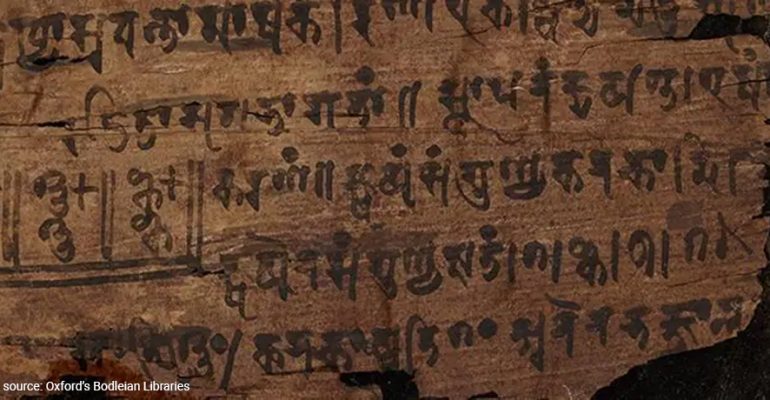
To nurture critical ‘conscientization,’ the curriculum must be reimagined to challenge Eurocentric narratives. As Ashis Nandy argues, this means unlearning the “colonisation of the mind” and reclaiming diverse Indian historical perspectives – from Dalit narratives to regional histories – offering a powerful counter to representations rooted in colonial bias. It also means celebrating pre-colonial achievements, like the development of the decimal system and advancements in medicine, which shaped not only India but contributed to global scientific and philosophical thought. Indigenous knowledge systems, too often dismissed during the colonial era as primitive, must be re-evaluated through a rigorous lens to explore their unique insights and potential synergies with modern scientific practices. By broadening the scope of knowledge to include historically marginalised voices and incorporating indigenous knowledge systems, this curricular shift empowers students to understand their place in history and become agents of positive social transformation. This curricular transformation demands collaboration between academics, knowledge keepers, and community elders, ensuring the inclusion of diverse perspectives and sources of knowledge.
Beyond reimagining content, decolonizing Indian education demands a radical shift in the language of instruction itself. India’s linguistic diversity – encompassing languages like Tamil, Bengali, Marathi, and countless others – is a strength, not a challenge. Multilingualism should be promoted, with instruction widely available in mother tongues for inclusion and cognitive benefits, as research from diverse contexts like Canada and South Africa has demonstrated. Fluency in English must not be conflated with intelligence, dismantling the colonial legacy of language-based hierarchies. Language is not merely a tool for communication but shapes how we understand the world, ourselves, and our place within complex histories. Consider, for example, the concept of ‘dharma’, a Sanskrit term with a depth of meaning that defies simple translation. Unlike its closest English approximation, ‘duty’, dharma implies not just obligation but encompasses purpose, ethics, and one’s role within the cosmic order. Pre-colonial Indian texts debated various interpretations of dharma, reflecting diverse viewpoints, a complexity lost when a term like ‘duty’, rooted in Western thought, becomes the dominant lens. Understanding one’s dharma was central to self-identity in many pre-colonial Indian societies. Imposing a single language, like English, disrupts this connection between language, worldview, and a sense of belonging. Colonial suppression of mother tongues aimed to erase not just ways of speaking, but ways of knowing and being. This necessitates developing teaching materials in multiple languages and training teachers in multilingual pedagogies.
Finally, the delivery method itself needs transformation. In many classrooms, the emphasis on rote learning and the limited space for questioning authority suggest the lingering influence of colonial-era education priorities, designed to produce compliant subjects rather than critical thinkers. While traditional Indian societies did have hierarchies, a spirit of debate and philosophical inquiry was integral to its intellectual landscape. This is seen in the rigorous logic of the Nyaya school, the insightful questioning found in the Upanishads, and the sceptical stance of schools like the Charvaka. For example, demonstrating the emphasis on seeking knowledge beyond mere received authority, in the Kena Upanishad, a student persistently asks what power directs the mind and senses, prompting the teacher to explore the deeper nature of reality:
ओं केनेषितं पतति प्रेषितं मनः केन प्राणः प्रथमः प्रैति युक्तः ।
केनेषितां वाचमिमां वदन्ति चक्षुः श्रोत्रं क उ देवो युनक्ति ॥ १ ॥
श्रोत्रस्य श्रोत्रं मनसो मनो यद् वाचो ह वाचं स उ प्राणस्य प्राणः ।
चक्षुषश्चक्षुरतिमुच्य धीराः प्रेत्यास्माल्लोकादमृता भवन्ति ॥ २ ॥
This profound questioning of origins is even older, echoed in the Nasadiya Sukta of the Rig Veda, which contemplates the very existence of existence itself:
इयं विसृष्टिर्यत आबभूव यदि वा दधे यदि वा न ।
यो अस्याध्यक्षः परमे व्योमन्सो अङ्ग वेद यदि वा न वेद ॥७॥
Colonial education suppressed India’s critical questioning streak, replacing it with an emphasis on obedience and memorization. This suppression was rooted in a view, exemplified by Macaulay’s Minute on Indian Education (1835), that dismissed India’s intellectual heritage as worthless: “a single shelf of a good European library was worth the whole native literature of India and Arabia”. Simultaneously, the British exploited and exaggerated pre-existing hierarchies, painting Indian society as inherently passive. Works like James Mill’s History of British India perpetuated this image, portraying India as lacking a tradition of self-governance. Colonial misrepresentation extended beyond formal education, with ethnographic studies often emphasising the seemingly ‘irrational’ or ‘exotic’ elements of Indian customs, justifying the ‘civilising’ mission of British rule. To rekindle the spirit of critical inquiry suppressed by colonialism, a decolonized approach to education must look both outward and inward for inspiration. Exploring elements of traditional gurukul systems, with their emphasis on mentorship, personalised learning paths (‘svadhyaya’), and the dialogic nature of knowledge-seeking, offers valuable insights into how holistic learning models could be reimagined for India’s future. Historically, access to gurukuls was often limited by caste and gender; a truly decolonized approach would reimagine their strengths in a way that ensures inclusivity and equity. Initiatives like the Rishi Valley School, founded by Jiddu Krishnamurti, exemplify how the gurukul focus on questioning and self-discovery can be adapted to modern contexts. Krishnamurti rejected rote learning and the uncritical acceptance of authority, emphasising the importance of questioning one’s own beliefs and assumptions: “You have to be your own teacher and your own disciple. You have to question everything that man has accepted as valuable or necessary.” Similar emphasis on student-centred learning and challenging dominant narratives can be found in the works of Global South educators focused on education for liberation, challenging the colonial construction of knowledge (Mignolo), deconstructing hierarchies of power (Quijano), and reclaiming indigenous epistemologies (Ndlovu-Gatsheni).
Ultimately, decolonizing education in India must extend beyond curriculum and pedagogy. It means imagining a specific type of learner and envisioning India’s role in the world. Ending the legacy of rote memorization and reclaiming the spirit of inquiry is essential for cultivating critical thinking, problem-solving, and creativity. A decolonized education system has the potential to nurture future leaders, scientists, artists, and citizens who will build a more equitable India, rooted in its own intellectual strengths, and contribute meaningfully to solving global challenges. This transformation necessitates nurturing a strong sense of Indian identity, fostering pride in the nation’s intellectual and cultural heritage that was systematically undermined during the colonial era. This process is intrinsically linked to social justice, seeking to empower marginalised communities whose knowledge systems and perspectives have been historically excluded. Finally, decolonization must not lead to insularity. Rather, its aim is to prepare Indian students to be global citizens, drawing on the strengths of Indian philosophical thought and innovation as they contribute to solving the world’s problems.
Author Biography
Sahana V. Rajan is a Fellow at the Jindal India Institute. She is an Assistant Professor at the Jindal Global Business School, O.P. Jindal Global University.
Related Posts



Why Does India’s Heart Beat for Hockey?