Naresh Singh
June Joseph Nye (1990, 2005, and 2011) introduced and developed the term “soft power.” He utilized it as a way to draw attention to the skill of persuasion. He separated it from the hard command power typically associated with tangible resources like military and economic strength. He did this by pointing out that the capacity to influence others’ preferences tends to be connected with intangible power resources such as culture, ideology, and institutions. The use of coercion and money constitutes ‘hard’ power. Soft power is the ability to attract desired outcomes or acquire what you want through attraction rather than force or payment. Others see the perceived morality of a state as part of its allure or appeal.
The counter argument posed by Manor and Golan (2020) is that in the emerging world order, soft power will be irrelevant or secondary since nations of the world will seek short term alliances with the 3 giants: USA, China, and India. These alliances, it is argued, will rest on shared interests, not shared values, in a world governed by increased competition, as opposed to cooperation. However, these authors allow that nations will collaborate with different giants towards different ends. They further argue that national power will stem from a nation’s status as a desirable partner in strategic alliances. This desirability may rest on diverse resources ranging from economic stability to technological infrastructure and geographic location. My emphasis is to indicate that this is where India’s soft power will play an important role within a mix of diplomatic resources.
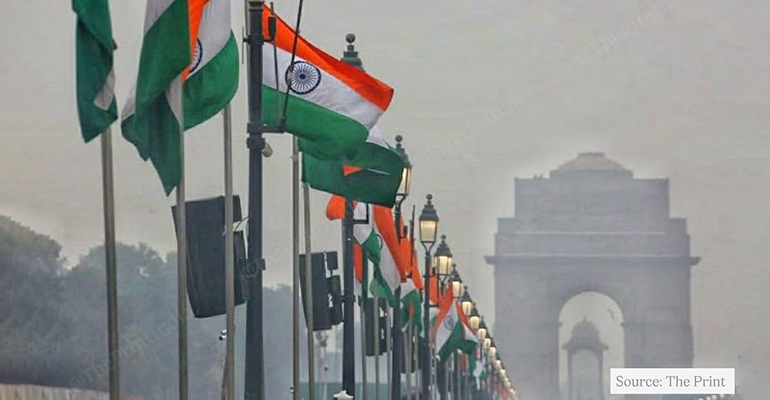
India’s soft power based on its culture, civilization, spiritual traditions, literature, philosophy, participation in international organizations, diplomacy, political organization, and state capacity has become a crucial component of its global prestige and influence. Soft power can change the world by promoting values and ideals that can have a transformational impact. For instance, promoting environmental sustainability, social justice, gender equality, and human rights might encourage others to embrace similar values and bring about beneficial change in their cultures. While some wicked problems like climate change need to draw on diplomatic resources like economic strengths and technological advances, a lot of the intransigence to change might be more amenable to soft power categories deployed in skillful mixes with hard power resources.
Most importantly, soft power can change the world, fostering positive relationships; pushing nations to work together. It holds the power to strengthen alliances, partnerships, and collaborations by presenting a favourable image and encouraging cultural interchange, diplomacy, and cooperation. When used effectively, soft power can be described as the capacity to influence others through framing the conversation, persuading, and arousing good feelings in order to achieve desired results. Soft power instruments like cultural diplomacy, people-to-people encounters, and education may be used to create economic alliances, trade agreements, investment possibilities, and development aid, resulting in economic gains and mutual prosperity. While hard power negotiations typically assume a zero-sum conception of power and hence a give and take approach to compromise, soft power can be conceptualized as a positive sum game conception to power in which all parties win.
India’s External Affairs Minister S. Jaishankar, echoing P.M. Modi has referred to India as Vishwa Bandhu (friend of the world): “If we look at today’s India and analyze the reasons why we are liked and respected, we will find that a lot of countries are keen to invest here, share technology and include it in the global supply chain” (Indian Express May 6). He goes on to say: “The international economy is right now in the midst of rebuilding its supply chains and ensuring more reliable manufacturing. This is most starkly evident in competitive domains like semiconductors, electric mobility and green technologies. It is only a Vishwa Bandhu that can ensure that India is fully embedded in these networks”. He concludes that India’s human, economic and technological resources can best be harnessed only when our partners fully appreciate their compatibility with Indian values and practices. The government of India frequently describes its world view as encapsulated in “Vasudeva Kutumbakam” (the world is one family). It is within this vision that it must win competitive advantage, economic gains and strategic geopolitical influence. It would be quite clear that these seemingly contradictory visions and goals could be reconciled to some to a great extent by the further development and deployment of India’s power.
India’s Ranking on the Global Soft Power Index
A commentary on The Wire notes that in the 2024 edition of Brand Finance’s Global Soft Power Index, India slipped from the 28th to 29th position. The article observes that while India, along with Brazil and South Africa, shows “relatively high familiarity and influence, especially in their home regions,” they continue to “struggle to fulfil their soft power potential” due to comparatively lower global reputation while leading nations like the U.S. and U.K. maintained top positions and China surpassed Germany and Japan to claim third.
Brand Finance publishes the Global Soft Power Index based on a survey of more than 1,70,000 respondents from over 100 countries to gather data on global perceptions of all 193 member states of the United Nations. The Index is the world’s most comprehensive study on perceptions of nation brands, providing an in-depth analysis of the evolving status of soft power as nations navigate significant global changes and challenges. Each nation is scored across 55 different metrics to arrive at an overall score out of 100 and ranked in order from 1st to 193rd.
Soft power is defined by the report as a nation’s ability to influence the preferences and behaviors of various actors in the international arena (states, corporations, communities, public, etc.) through attraction and persuasion rather than coercion.
Improving India’s Soft Power
Reactions to India’s relatively low position on the soft power index, compared to USA and China, might include a questioning of the methodology, the motive of those behind the index, or simply acknowledging the obvious reason – that if the ranking is based on per capita access to basic services and capabilities, India will naturally score lower.
India’s reputation at home and abroad includes widespread corruption, endemic poverty and hostility to business pollution in urban areas, child labor and violence against women. While some action is being taken to address these issues, and much more clearly needs to be done, the steps taken and any positive outcomes are being promoted more within India than internationally, including among the diaspora, who can play an important role in shaping India’s global reputation. According to Brookings (2018), India has more UNESCO World Heritage sites than all but five other countries, and more public policy think tanks than any country except the United States, China and the United Kingdom. But the world is hardly aware of this, as there is a need for much greater government engagement in disseminating such information. Similarly, it is only recently that Bollywood and Yoga have been identified as national contributions.
While India celebrates its export and impact of skilled human resources abroad, it needs to equally celebrate its world class universities at home and widen its foreign students draw beyond just those coming from neighbouring countries and Africa. Indian cuisine is known worldwide and loved in many places but seen as a lower-end cuisine, not usually associated with fine dining.
India’s diaspora include around 18 million people born in India and now living overseas, and nearly 30 million when including people of Indian origin. This is by far the largest diaspora of any country in the world. Members of this diaspora constitute 8% of founders of hi-tech start-ups in the US and many of the CEOs of the largest technology corporations including Google and Microsoft. They make up 1.6 % of the American population and are the most economically successful diaspora. In addition to their economic success, they are now members of congress, writers, singers, actors and sports personalities. The importance of the Indian diaspora is recognized by the Indian government and engagement activities are undertaken.
The world recognizes India as the home of deep spiritual understanding, teaching and lofty philosophical wisdom. The time might now be ripe when India as an ancient civilization and a leader in the modern world might seriously consider how its depth of spiritual knowledge, much of it consistent with the more modern sciences of quantum physics, complexity theory and neuroscience can be put to its national service and the service of the world. The most urgent situations in which this connection might yield superb dividends is in dealing with wicked and super wicked policy problems such as climate change, responsible AI, economic inequality, and in general the achievement of the SDGs. Although seemingly mired in the materialistic preoccupations of the West at the moment, India has the best chance to meet the material needs of its people, and to transcend the pervasive materialistic attitude and embrace the virtues of tolerance, openness, and coexistence – thanks to its cultural and spiritual capital. India may cultivate a favorable reputation and establish enduring partnerships with other nations by showcasing its cultural legacy and participating in cultural diplomacy. In this regard the role and capacity of the Indian Cultural Centers across the globe need to be urgently overhauled and revitalized to help shift the trajectory of human civilization. Within India, universities across the nation must now take up the task of teaching and researching in the field of applied spirituality and public policy, while IAS officers and other public servants’ training must include this perspective.
Author Biography
Naresh Singh is a Senior Fellow at the Jindal India Institute. He is a Professor and Executive Dean at the Jindal School of Government and Public Policy.