Minoan Objects: An Untraced Connection with the Indus
October 30, 2025 2025-11-03 5:09Minoan Objects: An Untraced Connection with the Indus
By Neha Khetrapal
This blog post proposes a niche conjecture that the ancient Baluchi regions or the pre-Harappan sites, along with Mesopotamia, served as trade and cultural intermediaries between the Indus Valley and ancient Crete (present-day Crete in Greece). This hypothesis is grounded in the visual similarities observed among heritage objects excavated from these site-outs.
Preface
The Greek and Roman Art section of The Metropolitan Museum of Art hosts two intriguing objects, associated with the Minoan civilisation – a Bronze Age civilisation, named after the legendary King Minos. These objects include a Bronze Bull statuette and a set of Bronze double-axe heads. The former, associated with the Late Minoan period (ca. 1400-1200 BCE), is thought to represent a remnant of Minoan religious practice. The latter (ca. 1700–1450 BCE), likewise imbued with ritual significance, may have been used in votive offerings.
Archeological efforts have uncovered double-axe heads in association with female figurines and have also revealed the presence of double-axe motifs close to a prominent female figure – often interpreted as a goddess – on Minoan frescoes and seal impressions. Within Minoan iconography, this female figurine is frequently linked with scenes of natural abundance, implying her role in sustaining life and fertility. As such, theorists have argued that the double-axe could be considered an attribute of the Goddess – representing her power over vegetation and fertility. Furthermore, the bull and the double-axe heads are interpreted in tandem too, following proposals that have identified double axes as a sacred ritual instrument for bull sacrifice.
Interestingly, the Minoan iconography is also entwined with sporadic evidence for Minoan (maritime) trade routes – extending eastwards. The discovery of Cretan pottery, associated with the Middle Minoan II and Middle Minoan III periods, in Egypt and along the Syrian coast further bolsters the maritime trade claim. As the traded goods moved along the route, the Cretan visual imagery most likely evolved alongside, local artistic traditions. The bull motif appears in this region as well, though depicted with wings – a feature characteristic of Mesopotamian composite creatures.
The Minoan Axes, Goddess and Bull & the Indus Valley
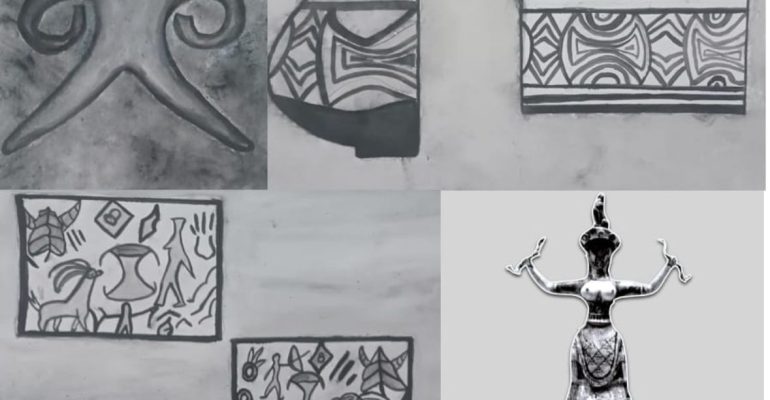
Miles away from the island of Crete, there is sporadic evidence for double-axe motifs on seals (C-23 seal A & a) – excavated from Chanhu-Daro, a site inhabited in the 3rd millennium BCE and located approximately three kilometres from the Indus River (see Figure 1). In addition to the excavated seals, Parpola (2008) highlighted the presence of a double-axe motif on one of the Copper Tablets – excavated from Mohenjodaro, another major Indus Valley site in present-day Pakistan. While establishing a direct connection between these Indus axe motifs and their Minoan counterparts may be an arduous endeavour, due to the lack of written texts, the visual similarities suggest the possibility of intercultural exchange – midway at Mesopotamia (modern-day Iraq and parts of Kuwait, along with parts of Syria, Turkey, and Iran). Mesopotamia serves as the most likely hub of intercultural mixing due to its strategic geographical position – linking the Aegean region with South Asia.
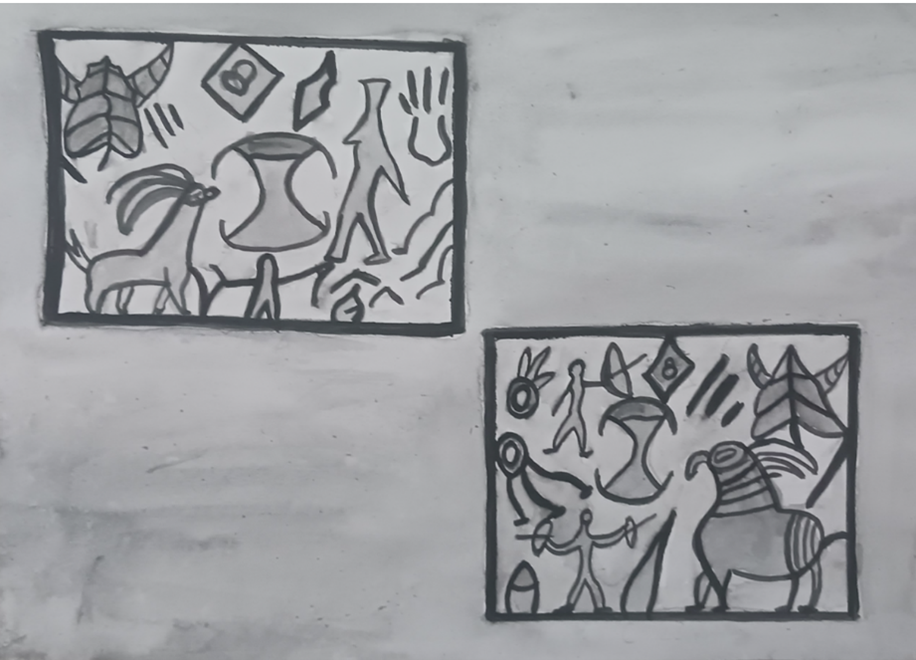
Figure 1
Source: Aanika Vaish
Further away from the Indus Valley sites and eastwards, there have been other discoveries of copper and silver antiquities (or the Copper Hoard objects) from the land between the two rivers – Ganges and Yamuna. This region is also known as the Indian Ganges-Yamuna Doab of the Northern part of India. The discovery of these objects, which bear resemblance to those from the Harappan regions, lends weight to the proposal that the hoard objects may have been produced by groups who may have travelled eastwards, following the decline of the Harappan civilisation. The most striking parallel is the discovery of double axe heads paired with copper anthropomorphs, often deciphered as female fertility figures or prototypes of Mother Goddess (see, Figure 2). Besides, there are notable similarities in the prevalence of bulls in both Minoan Crete and the Indus Valley civilisation, as well as in the sacred interpretation attached to bulls across both regions.
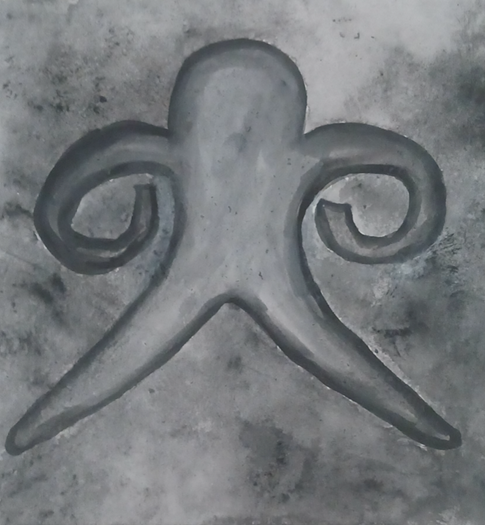
Figure 2
Source: Aanika Vaish
Pre-Indus Sites – Baluchi Cultures
Whilst the Copper Hoard finds represent the easternmost extensions of post-Harappan material traditions, it is equally important to consider the western peripheries of the Indus cultural sphere. The Baluchi cultures of present-day Baluchistan – encompassing sites like Zhob, Quetta, Nal, and Kulli – offer a complementary perspective. Chronologically, these agricultural settlements arose more than 3,000 years before the major settlements of the Indus Valley Civilisation. As such, these sites may be regarded as pre-Harappan in nature.
An intriguing aspect of the Baluchi cultures lies in their material finds, which bear motifs reminiscent of sacred Minoan symbols – double-axe heads, bulls, and figurines of the Great Mother Goddess. For instance, two vessels – associated with the Nal tradition – exhibit double-axe motifs (see, Figure 3). Other excavated finds include bull figurines and female figurines from the Zhob Valley – Zhob Mother Goddess. While tracing direct connections between Baluchi material heritage and the Minoan iconography remains cumbersome, theorists have underscored trade and cultural interactions – linking Central Asia, the Persian Gulf and Baluchistan. Taken together, the evidence from Ancient Crete, the Ganges–Yamuna Doab and the Baluchi cultures underscores the existence of sacred and material continuities spanning the Bronze Age world.
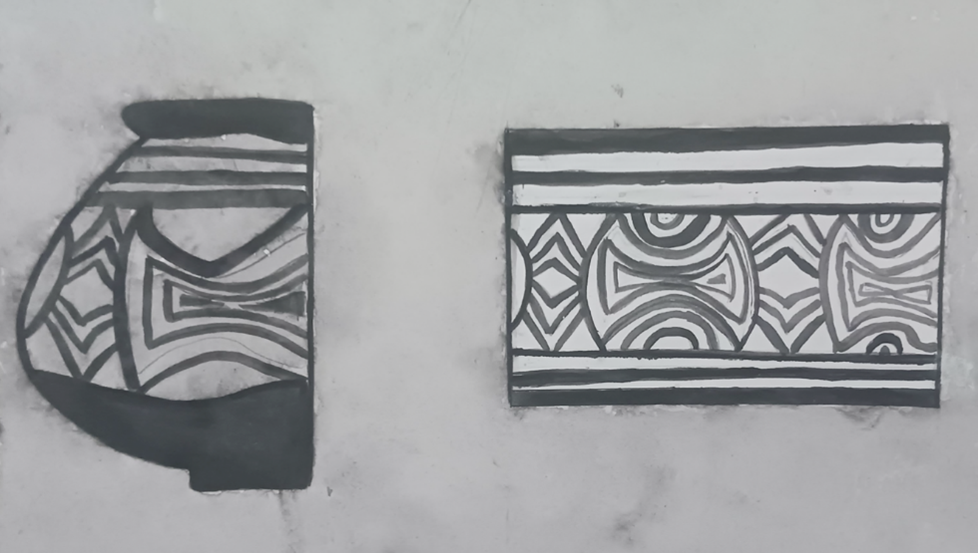
Figure 3
Source: Aanika Vaish
Conclusion
As visitors at The MET Museum marvel at the ancient Minoan artworks and artefacts, they may not decipher the Minoan heritage as a part of a cultural continuum between the West and the East. But the excavated finds – bearing visual similarities – demands further deliberations about this continuum, including the lesser-investigated Baluchi cultures.
Author Biography
Neha Khetrapal is an Associate Professor and the Associate Dean for Internationalisation at the Jindal Institute of Behavioural Sciences and a Fellow of the Jindal India Institute, OP Jindal Global University. Her research interests include heritage and museum studies.