Neha Khetrapal
Download PDF
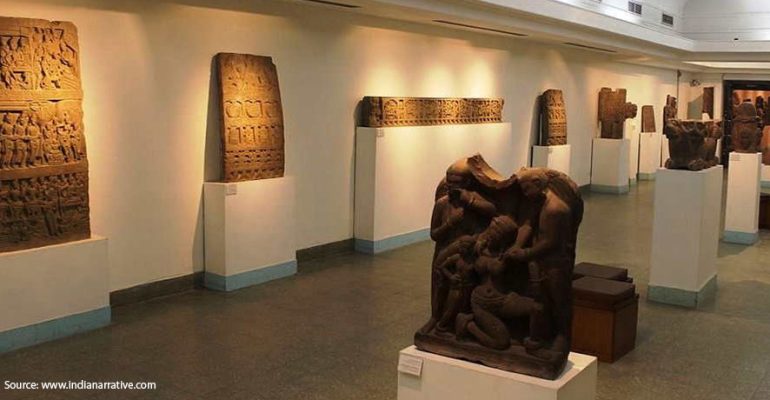
The evolution of museums in India has undergone a remarkable change – from the ones that were established by the British Orientalists to the contemporary ones – as managed by the Government of India. Despite this evolution, the Indian museum space has pervasively been an elitist endeavour. While the early museums portrayed the ancient Indian heritage from the British perspective, the ones that are managed by the Indian Government – after India attained independence from the British crown – preserved the narrative legacy that the British left behind. As a result, the hegemonic flow of information – from the ‘comparatively’ more knowledgeable curators to the visitors – has rarely been challenged within the Indian museum space. Besides the hierarchical nature of knowledge construction, the Indian museum space is also marked by another problematic feature – low footfall of visitors. A low footfall – overtime – becomes increasingly entangled with collections that are displayed, as a part of museum exhibits. Consequently, museum exhibits either showcase ‘marginalised’ heritage from a privileged perspective – reminiscent of the colonial legacy – or may fail to exhibit heritage that belongs to the repressed or the marginalised. For the critics, post-colonial nation-states – thus – become guilty of re-creating the same knowledge and power hierarchies that they wished to dismantle under their colonisers.
The Resonant Diplomatic Sphere
Museums extend an important platform – for building people-to-people transnational connections – by visually showcasing civilisation’s highest achievements and its heritage. These spaces afford an arena for people to discover each other’s heritage and culture and navigate shared values. As such, people-to-people connections help build relations, transnationally, even as countries struggle to find common ground. Culturally and socially-navigated commonalities, in this regard, can go a long way in unsettling power and knowledge hierarchies – reminiscent of colonial legacies. The representation of all – including the subaltern and the marginalised – matters, as such. Citizen non-participation – thus – becomes, increasingly, problematic for a nation-state that has vowed to reinvigorate her diplomatic endeavours through the cultural prism.
Initiatives
In an ingenious manner, India launched two initiatives in 2023 – during her G20 presidency – to both promote inclusive participation of her citizenry and to showcase shared heritage of G20 members and invited countries. The first initiative, the International Museum Expo, marked the International Museum Day (18th May). With artifacts from collections of several museums across India paired with virtual walkthroughs, exhibits of books and exquisitely curated activities for the visitors, the Expo – at New Delhi’s major exhibition ground – was planned as an unconventional affair. As a part of the event, a mobile museum initiative was also launched – temporarily – with the agenda of bringing the museum closer to the masses. Over the course of the three days, the Expo unsettled the hierarchical (colonial) separation between the visitors and the curators by introducing participatory programs that allowed the visitors to discover Indian arts, culture and heritage. The second initiative, Culture Corridor or ‘museum in the making’, targeted cross-cultural understanding and appreciation for cultural pluralism by showcasing cultural artifacts from diverse geographical regions.
These two initiatives exemplified India’s broader emphasis on people’s participation – transcending high-end diplomatic endeavours conducted behind closed doors – for addressing global challenges, including the North-South divide and the East-West disparities. During the conclusion of the G20 Summit, the Indian Prime Minister also re-iterated the ideals of ‘One Earth, One Family, and One Future’ – drawn from the ancient Sanskrit phrase ‘Vasudhaiva Kutumbakam’ – as a complement to these endeavours.
Geopolitical Complexities and the Allure of Museums
It becomes evident that the Indian nation-state attempted to re-cast the Indian museum experience during her G20 presidency. Was the G20 presidency chosen, strategically, to launch such an initiative? Did the Indian government particularly cherry pick the museum space, at least, as a means of exploring creative endeavours for addressing challenging geopolitical conditions during the presidency of India? Indian External Affairs Minister, Dr. S. Jaishankar while speaking at the ‘India-UN for Global South: Delivering for Development’ event in the US, emphasised that the North-South and the East-West divide – ensuing from tensions between major powers like Russia and the West paired with China and the US – made the G20-year particularly challenging for India’s foreign policy. India’s desire to maintain strategic autonomy was increasingly put to test during these challenging times. These complex geopolitical turbulences forced India to strike a cautious balance – between vouching for an equitable distribution of power in the international system and being labelled as a state that promotes an anti-Western agenda – in order to maintain her strategic autonomy. There were open deliberations that – with the inclusive and non-confrontational agenda subsumed under the ‘One Earth, One Family, One Future’ theme – there were risks of being alienated from forums like the Shanghai Cooperation Organisation (SCO) and even the BRICS.
Challenging geopolitical conditions, in the past, have propelled nation-states on the path of cultural diplomacy – conducted – through museums. An example includes the mediating role of the British Museum’s exhibition ‘Forgotten Empire: the world of Ancient Persia’ in allaying tensions between Iran and the UK. The exhibition included art that was loaned by two Iranian museums, besides others – an unprecedented endeavour in which several Iranian artefacts found their way out of Iran. The cultural exchange opened scope for dialogues and – resultantly – the Iranian vice president shared the stage with the then British Secretary of State for Foreign Affairs. This example potently encapsulates the persuasive power of museums.
Taking the persuasive power of museums to new heights with the help of the International Museum Expo and the Culture Corridor, New Delhi ingeniously utilised the museum space as a microcosm for navigating geopolitical challenges or as a viable lynchpin for precipitating an equitable distribution of power in the international system. By inviting people’s participation at different levels, the domestic and the G20 platform, New Delhi sent out a pertinent message about involving people – from all walks of life – for keeping doors open in the midst of turmoil.
The Common Decolonial Stance
The International Museum Expo attempted to expand the reach of the museums – wherein – people, even those for whom the museum has been an elite affair, could congregate together to rediscover their heritage. The boundaries between an elite culture versus the ‘others’, as built by the Orientalists, were made fuzzy – as people personally conversed with the curators, museum professionals and consultants through workshops, panel discussions and seminars. This was – indeed – a strong indication that India urges her citizenry to play an important participatory role in cultural diplomacy. The stance on people’s participation in cultural diplomacy – cladded in overtones of museum exploration – was an inclusive and a non-confrontational attempt for addressing geopolitical challenges by narrowing lines of separation between the ‘domestic’ and the ‘international’. This proposal was scaled up – albeit modestly – by inviting the G20 nations and other countries to participate in the Culture Corridor.
Conclusion
Museums – in unique ways – allow imaginative spaces for expressing collective desires that could be difficult to accommodate within ongoing political discourses. In the case of New Delhi, the intended desire hinges upon representing the voice of the Global South for addressing geopolitical issues. By improving the representation of unheard sentiments, Delhi is determined to transform elite political affairs into a people’s affair. Museums could play a key role in this regard. And, if people find the museums as a comparatively ‘more’ accessible platform for expressing their collective and individual wishes then India has struck the right chord with this endeavour. This could be the beginning of a new era for both Indian museology and diplomacy.
Acknowledgement
This work is supported by the O.P. Jindal Global University Research Grant, JGU/RGP/2023/008.
Author Biography
Neha Khetrapal is a Deputy Director of the Jindal India Institute (JII). She is an Associate Professor at the Jindal Institute of Behavioural Sciences (JIBS), a research Institute of the O.P. Jindal Global University (JGU).