
Kitchen on Wheels: Some Notes from the Field
February 2, 2026 2026-02-02 0:09Kitchen on Wheels: Some Notes from the Field
By Navreet Kaur Rana
‘Kitchen on Wheels’, a mobile and portable set-up for selling cooked food, is not a new concept. A recent example of the kitchen as a portable phenomenon is the food truck. The food truck industry has revolutionized the modern culinary landscape by transforming the traditional dining experience into a high-octane, mobile, and portable cooking service. Unlike brick-and-mortar restaurants tied to a single geographic location, food trucks function as “kitchens on wheels,” allowing chefs to bring gourmet experiences directly to consumers. This mobility serves as a strategic business advantage, allowing operators to follow footfall patterns, shift between busy business districts during lunch and vibrant festivals at night, and reduce the overhead costs associated with permanent real estate.
At the heart of a food truck’s success is its compact and efficient engineering. Every square inch of the vehicle is optimized for high-volume production, typically featuring professional-grade stovetops, fryers, and refrigeration units powered by onboard generators. This portability allows for a unique level of culinary agility; a truck can serve wood-fired pizzas in a park one day and artisanal tacos at a wedding the next. Furthermore, the close proximity between the chef and the customer fosters a transparent, “street-side” intimacy that traditional dining often lacks.
Discussing ‘street-side intimacy’, a quality that needs to be preserved even with mechanised vehicles like food trucks – it emerges more organically in the case of carts, where temporary cooking equipment is fixed to the cart itself and food is prepared directly in front of the consumer. I came across one such unique experience in my hometown, Lakhimpur Kheri, a town in Uttar Pradesh bordering Nepal. People migrating from Nepal to this town for work opportunities is a common occurrence. During a recent visit, I stopped by a cart to buy my childhood favourite, Naan Kahtai, which can be safely described as the Indian version of biscuits. (Although bakeries, tandoors, and naan have Persian origins, they have been wholly adopted into Indian culinary traditions, making it reasonable to consider them Indian today.)
The cart had a makeshift wood-fired oven, where several round baking trays were arranged in a drum-like oven. The naan khatai were meticulously arranged on each plate. On the same cart was a small rechargeable, portable battery which would last enough for one electric bulb to keep glowing after sunset. While the naan khatai was being baked, he made dough for the next batch using all-purpose flour, oil for the crunch, sugar and milk. While I sheepishly checked the temperature of the naan khatai before buying, as I wanted them hot, literally fresh off the oven, I struck up a conversation with him about when he had been selling these. He said that he migrated from Nepal about 5 years ago, and has been selling naan khatai in the town since then. The naan khatai was now being sold at INR 40 per 100 grams. To keep the conversation going, I asked if I could take a picture of him and the naan khatai. What he said surprised and saddened me at the same moment. He agreed that I could take a picture of him and his cart and told me that I was the second person who had ever wanted to take his picture. Back in Nepal, some tourists had clicked a picture of him when he was working as a street vendor there as well. He happily posed for me with his artistically baked goodies. At that moment, I promised to write an article about him and his craft, along with his photographs, and to show it to him when I return home. He smiled and said, ‘Hamara photo chhapega’ (meaning, ‘my photo will get published/printed’). He also told me that I can find his cart at the same spot every day around 7 in the evening.
Keeping aside the risks of the wood oven and logs of wood placed next to a battery and electrical equipment, the hygiene standards of the location where the cart is temporarily parked and the quality of the saturated fat used in this unique street food, but upholding the street-style intimacy and keeping up to my promise, this is my attempt to document his craft and the legacy of portable bakeries in India.
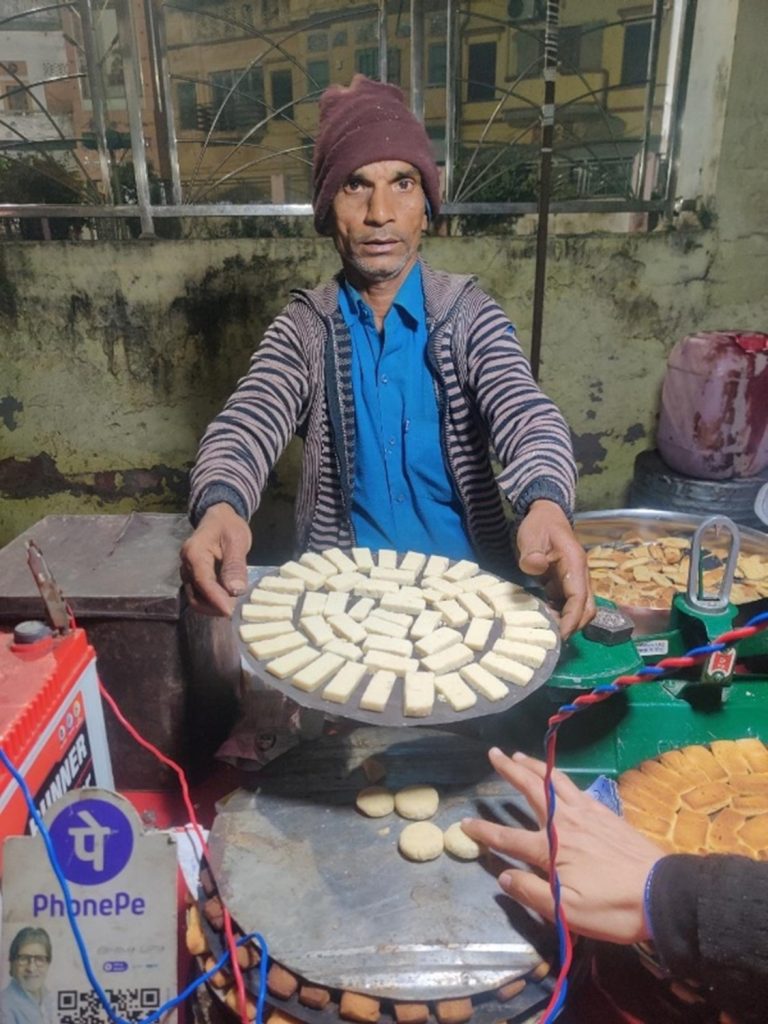
Figure 1. The naan khatai vendor in Lakhimpur Kheri
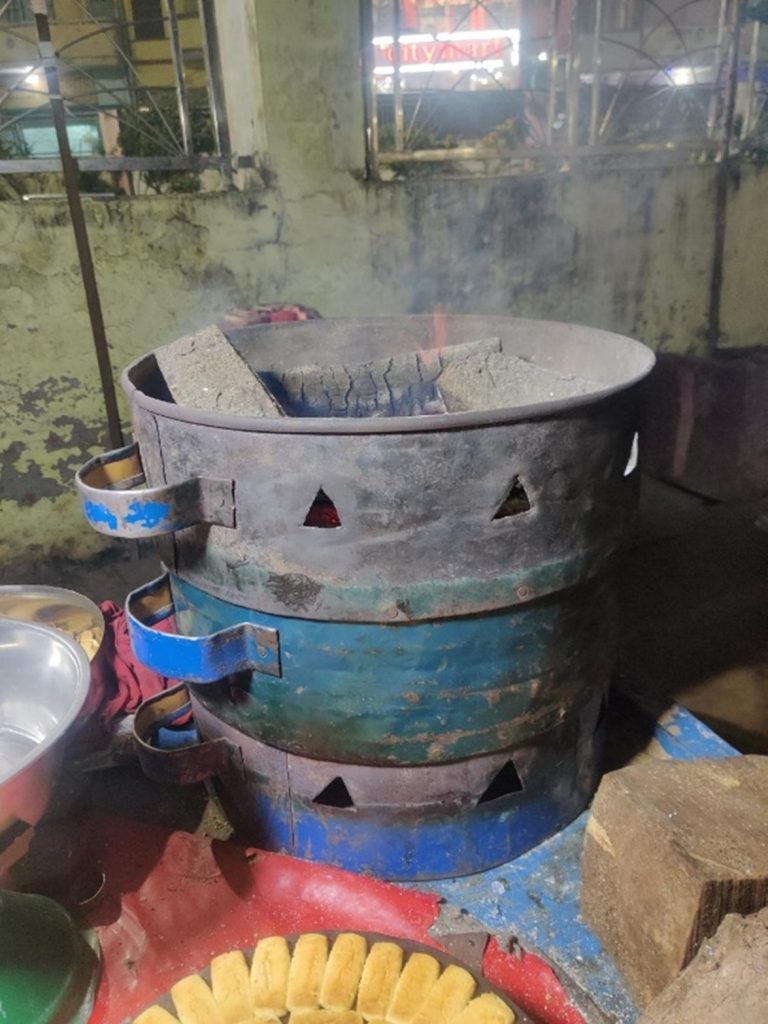
Figure 2: The portable wood-fire oven
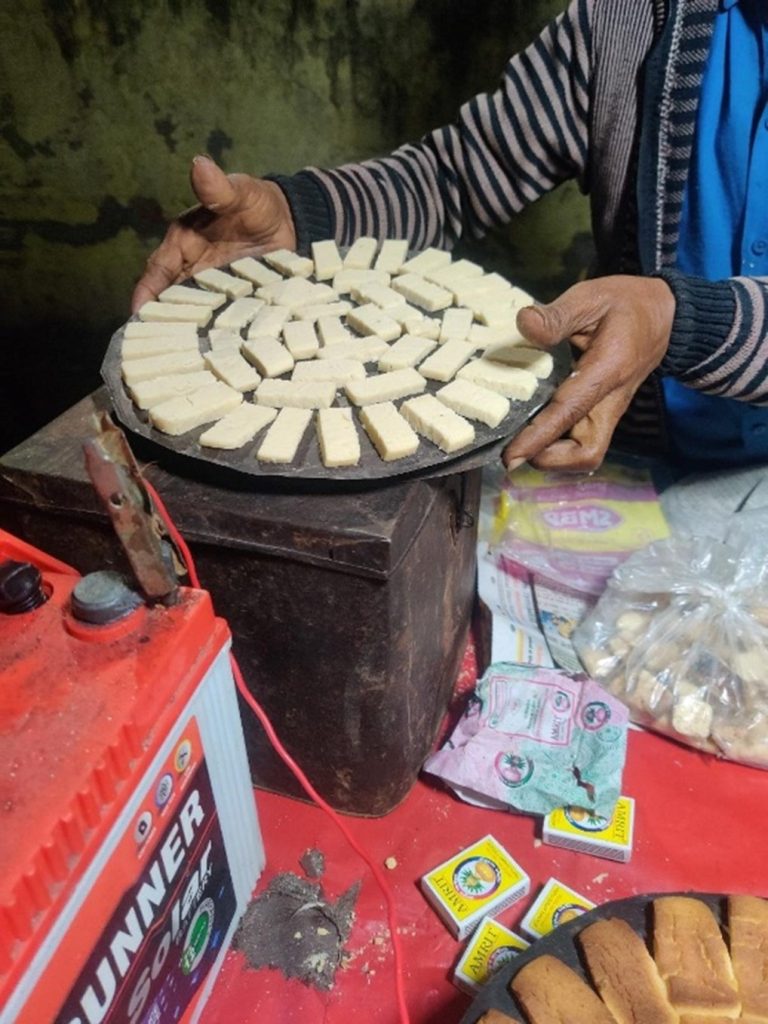
Figure 3: Unbaked naan khatai arranged on a baking tray; Rechargeable battery to light up the cart
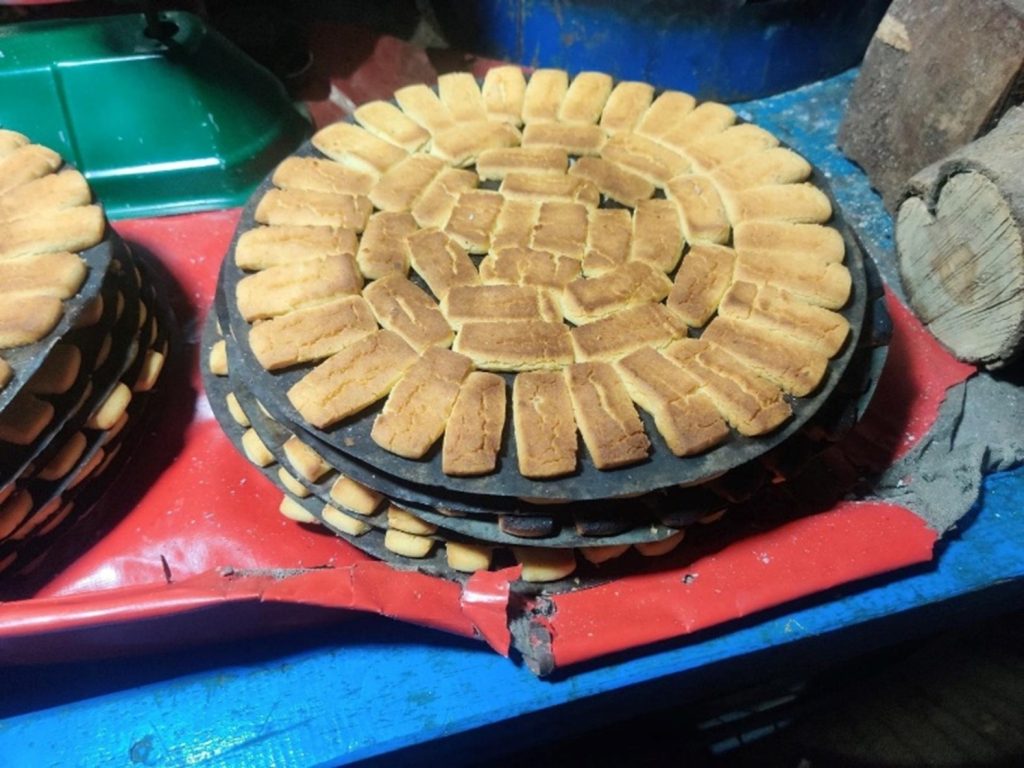
Figure 4: Perfectly baked naan khatai
Author Biography
Navreet Kaur Rana is a Fellow at the Jindal India Institute. She is a Manager at the Office of the Dean of Research (Projects, Grants and Publications) at O.P. Jindal Global University.