Archana Rath
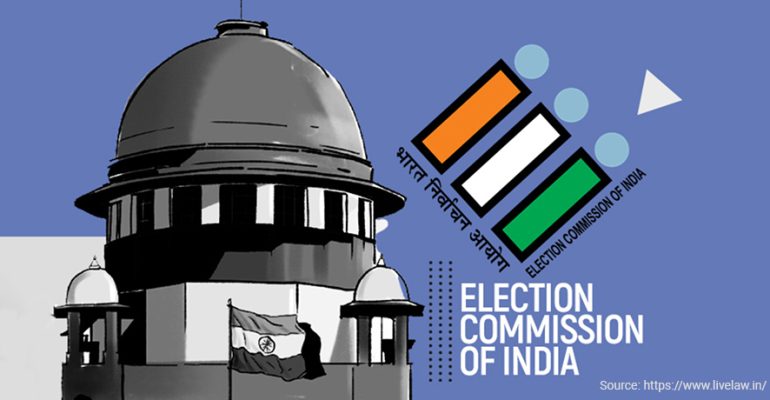
The Election Commission of India (ECI) is an important institution for democracy, as elections represent freedom and equality, allowing for people to participate in a democratic manner. The ECI functions alongside other institutions, creating boundaries and processes that affect the practice of a democratic state. Articles 324 and 329 of the Constitution of India are the sources of the ECI’s autonomy, in matters related to elections. The ECI regularly meets administrative officials across various constituencies to assess ground level situations prior to the elections and takes necessary action. The ECI also meets political parties to discuss their concerns, taking into consideration dates of local festivals and school examinations prior to announcing election dates. The ECI discusses with the Ministry of Home Affairs regarding the Central Armed Police Forces to be stationed around the country for the smooth conduct of elections. Vulnerability mapping is undertaken by the ECI to devise unique mechanisms to protect vulnerable populations from being coerced prior to elections. If the ECI decides that the conduct of free and fair elections won’t be possible, they can postpone the elections.
The Representation of People’s Act, 1951 contains provisions related to the qualification and disqualification of candidates, the schedule of the conduct of elections, role of candidates, counting of votes, declaration of results, details for corrupt practices and electoral offences, registration of political parties, etc. After Supreme Court judgments on the Union of India vs. Association for Democratic Reforms and Another, and the People’s Union for Civil Liberties vs. Union of India and another, it is mandatory for the ECI to collect from the candidates and share with the public, details regarding their criminal records, financial assets, educational qualifications, interpreted as the constitutional right to freedom of expression.
India has seen strong Chief Election Commissioners (CEC), such as T.N. Seshan, M. S. Gill and James Lyngdoh. Till October 1993, the ECI comprised one person, except a brief period between 16 October 1989 and 1 January 1990, when two additional commissioners were appointed. At present, the ECI consists of 1 CEC and 2 election commissioners. Based on The Chief Election Commissioner and Other Election Commissioner (Appointment, Conditions of Service and Term of Office) Act, 2023, the CEC and the other Election Commissioners are appointed by the President, on the recommendation of the selection committee, comprising the Prime Minister, a Cabinet Minister, and Leader of Opposition in the Lok Sabha. While being under controversy from time to time, the ECI continues to enjoy a great deal of trust from much of the population. At the time of the 2019 elections, 57% of the population surveyed placed a “great deal of trust” on the ECI.
With all these experiences in the conduct of elections, India has been providing “democracy assistance” to countries around the world. India is committed to assisting countries with experience sharing and technology used in the conduct of elections. India is one of ten founding members of the ‘Community of Democracies’, started in 1999. India has signed Memorandums of Understanding (MoUs) with the United Nations. In 2011, the ECI established the India International Institute of Democracy and Election Management (IIIDEM), to train election officials regarding the conduct of elections. The ECI has signed 32 MoUs with Election Management Bodies (EMBs) from 29 countries and 3 international organizations. ECI officials frequently visit different countries for study/observation missions. Furthermore, India chaired the Association of World Electoral Bodies (A-WEB) from 2019 to 2021. A-WEB consists of 119 EMBs from 109 countries, with India as a founding member. India’s CEC was chair of the Forum of Election Management Bodies of South Asia (FEMBoSA) for 2020. India also holds the chairmanship of the Association of Asian Election Authorities (AAEA) for the term spanning from 2022 to 2024. Indian technology, related to Electronic Voting Machines (EVMs) and indelible ink bottles have been shared with countries around the world. EVMs have been used in the 2024 Lok Sabha Elections. They were first used in Kerala’s Paravur Assembly constituency in 1982. The indelible ink technology has been used in India since the 1952 elections: the ink leaves a mark on the person’s forefinger and is proof of the person having cast their vote, thus preventing duplicate voting.
From the time of the first elections in 1951-52, the Indian democratic experience has led the ECI to be amongst world leaders in the conduct of elections. While occasionally under pressure from the executive, it can be argued that elections have been conducted, in a free and fair manner, for the most part, by the ECI. The MoUs with countries from different parts of the world attest to the mutual sharing of knowledge and capacity building that India engages in. The global partnerships with international organizations and countries around the world portray the symbolic value of the ECI’s efforts in ensuring the continuous renewal of the democratic experience.
Author Biography
Archana Rath is a Fellow at the Jindal India Institute. She is an Assistant Professor at the Jindal School of International Affairs, O.P. Jindal Global University.